
 By admin
Best Programming Languages for Developing Mobile Applications: A Comprehensive Guide
In today’s fast-paced digital world, mobile applications have become an integral part of our daily lives. From ordering food to managing finances, mobile apps have revolutionized the way we interact with technology. As the demand for mobile apps continues to grow,Best programming languages for developing mobile applications so does the need for skilled developers who can create high-quality,Best programming languages for developing mobile applications user-friendly applications. One of the most critical decisions a developer must make when embarking on a mobile app development project is choosing the right programming language.
In this article, we will explore the best programming languages for developing mobile applications, their unique features, and the scenarios in which they excel. Best programming languages for developing mobile applications Whether you’re a seasoned developer or a beginner, this guide will help you make an informed decision about which language to use for your next mobile app project.
1. Swift: The Powerhouse for iOS Development
Overview:
Swift is a modern, open-source programming language developed by Apple specifically for iOS, macOS, watchOS, and tvOS app development. Best programming languages for developing mobile applicationsSince its introduction in 2014, Swift has become the go-to language for building high-performance, secure, and scalable iOS applications.
Key Features:
- Fast and Efficient: Swift is designed to be faster than its predecessor, Objective-C, with optimized performance for Apple devices.
- Safe and Secure: Swift includes features like optional and type safety, which help developers write safer code and reduce the likelihood of runtime errors.
- Easy to Learn: With a clean and concise syntax, Swift is beginner-friendly and easier to read compared to Objective-C.
- Interoperability: Swift can be used alongside Objective-C, making it easier to integrate into existing projects.
Best Use Cases:
- Developing native iOS apps.
- Building apps that require high performance and low latency.
- Creating apps with a modern, user-friendly interface.
2. Kotlin: The Modern Choice for Android Development
Overview:
Kotlin is a statically typed programming language developed by JetBrains and officially supported by Google for Android development. Since its adoption as a first-class language for Android in 2017, Kotlin has gained immense popularity among developers due to its simplicity and versatility.
Key Features:
- Concise Syntax: Kotlin reduces boilerplate code, making it easier to write and maintain.
- Interoperability with Java: Kotlin is fully compatible with Java, allowing developers to use existing Java libraries and frameworks.
- Null Safety: Kotlin’s type system helps eliminate null pointer exceptions, a common issue in Java.
- Coroutines: Kotlin supports coroutines, which simplify asynchronous programming and improve app performance.
Best Use Cases:
- Developing native Android apps.
- Migrating existing Java-based Android apps to a more modern language.
- Building cross-platform mobile apps using Kotlin Multiplatform.
3. JavaScript: The Versatile Language for Cross-Platform Development
Overview:
JavaScript is one of the most widely used programming languages in the world, and its versatility extends to mobile app development. With frameworks like React Native, JavaScript enables developers to build cross-platform mobile apps that run on both iOS and Android with a single codebase.
Key Features:
- Cross-Platform Development: JavaScript, combined with frameworks like React Native, allows developers to write once and deploy on multiple platforms.
- Large Ecosystem: JavaScript has a vast library of frameworks, tools, and resources, making it easier to find solutions to common problems.
- Community Support: JavaScript has one of the largest developer communities, ensuring continuous updates and support.
- Cost-Effective: Developing cross-platform apps with JavaScript can save time and resources compared to building separate native apps.
Best Use Cases:
- Building cross-platform mobile apps.
- Developing apps with a focus on rapid prototyping and deployment.
- Creating apps that require frequent updates and iterations.
4. Dart: The Language Behind Flutter
Overview:
Dart is a programming language developed by Google and is the backbone of the Flutter framework. Flutter is a popular open-source UI toolkit for building natively compiled applications for mobile, web, and desktop from a single codebase.
Key Features:
- Hot Reload: Dart’s hot reload feature allows developers to see changes in real-time, speeding up the development process.
- High Performance: Dart is optimized for fast execution, making it ideal for building high-performance mobile apps.
- Expressive UI: Flutter’s rich set of customizable widgets enables developers to create visually appealing and responsive user interfaces.
- Single Codebase: Dart allows developers to write one codebase for both iOS and Android, reducing development time and effort.
Best Use Cases:
- Developing cross-platform mobile apps with a single codebase.
- Building apps with highly customized and visually rich user interfaces.
- Creating apps that require frequent UI updates and iterations.
5. Java: The Veteran of Android Development
Overview:
Java has been the cornerstone of Android development for over a decade. While Kotlin has gained popularity in recent years, Java remains a reliable and widely used language for building Android apps.
Key Features:
- Platform Independence: Java’s “write once, run anywhere” philosophy makes it a versatile choice for Android development.
- Rich Libraries: Java offers a vast collection of libraries and frameworks that simplify app development.
- Strong Community: Java has a large and active developer community, providing extensive resources and support.
- Proven Track Record: Java has been used to build some of the most popular Android apps, making it a trusted choice for developers.
Best Use Cases:
- Developing native Android apps.
- Maintaining and updating legacy Android applications.
- Building enterprise-level Android apps with complex functionalities.
6. C#: The Language for Xamarin Development
Overview:
C# is a versatile programming language developed by Microsoft and is widely used for building mobile apps through the Xamarin framework. Xamarin allows developers to create cross-platform apps using C# and the .NET framework.
Key Features:
- Cross-Platform Development: Xamarin enables developers to write one codebase for iOS, Android, and Windows apps.
- Native Performance: Xamarin apps have near-native performance, providing a seamless user experience.
- Access to Native APIs: Xamarin provides full access to native APIs, allowing developers to leverage platform-specific features.
- Strong Typing: C# is a strongly typed language, reducing the likelihood of runtime errors.
Best Use Cases:
- Developing cross-platform mobile apps with a single codebase.
- Building apps that require access to native APIs and platform-specific features.
- Creating enterprise-level apps with complex functionalities.
7. Python: The Rising Star in Mobile Development
Overview:
While Python is not traditionally used for mobile app development, its simplicity and versatility have made it a popular choice for certain types of mobile apps, especially when combined with frameworks like Kivy or BeeWare.
Key Features:
- Easy to Learn: Python’s simple syntax makes it an excellent choice for beginners.
- Rapid Development: Python’s extensive libraries and frameworks enable rapid prototyping and development.
- Cross-Platform Support: Frameworks like Kivy allow developers to build cross-platform mobile apps using Python.
- Strong Community: Python has a large and active community, providing extensive resources and support.
Best Use Cases:
- Developing lightweight mobile apps.
- Building apps with a focus on rapid prototyping and experimentation.
- Creating apps that require data analysis or machine learning capabilities.
8. Objective-C: The Legacy Language for iOS Development
Overview:
Before Swift, Objective-C was the primary language for iOS and macOS app development. While it has been largely replaced by Swift, Objective-C is still used in maintaining and updating legacy applications.
Key Features:
- Mature Ecosystem: Objective-C has been around since the 1980s and has a mature ecosystem with extensive libraries and frameworks.
- Compatibility with C and C++: Objective-C is a superset of C, allowing developers to integrate C and C++ code seamlessly.
- Dynamic Runtime: Objective-C’s dynamic runtime enables features like method swizzling and dynamic typing.
Best Use Cases:
- Maintaining and updating legacy iOS apps.
- Integrating with existing C or C++ codebases.
- Working on projects where Swift is not yet adopted.
9. Go (Golang): The Language for High-Performance Apps
Overview:
Go, also known as Golang, is a statically typed language developed by Google. While it is not traditionally used for mobile app development, Go’s simplicity and performance make it a viable option for building backend services and high-performance mobile apps.
Key Features:
- Fast Compilation: Go’s efficient compiler ensures quick build times, speeding up the development process.
- Concurrency Support: Go’s goroutines make it easy to handle concurrent tasks, improving app performance.
- Minimalistic Syntax: Go’s clean and simple syntax reduces the learning curve for developers.
Best Use Cases:
- Building backend services for mobile apps.
- Developing high-performance apps that require efficient concurrency handling.
- Creating lightweight and fast mobile apps.
10. Ruby: The Language for Rapid Prototyping
Overview:
Ruby is a dynamic, object-oriented programming language known for its simplicity and productivity. While Ruby is not commonly used for mobile app development, frameworks like RubyMotion allow developers to build cross-platform mobile apps using Ruby.
Key Features:
- Developer-Friendly: Ruby’s elegant syntax and focus on developer happiness make it a joy to work with.
- Rapid Prototyping: Ruby’s extensive libraries and frameworks enable quick development and prototyping.
- Cross-Platform Support: RubyMotion allows developers to build iOS and Android apps using Ruby.
Best Use Cases:
- Rapid prototyping of mobile apps.
- Building lightweight and experimental apps.
- Developing cross-platform apps with RubyMotion.
11. TypeScript: The Enhanced JavaScript for Mobile Development
Overview:
TypeScript is a superset of JavaScript that adds static typing and other features to enhance the development experience. It is widely used in conjunction with frameworks like React Native and NativeScript for building cross-platform mobile apps.
Key Features:
- Static Typing: TypeScript’s static typing helps catch errors during development, improving code quality.
- Enhanced Tooling: TypeScript offers better tooling and autocompletion, making development faster and more efficient.
- Compatibility with JavaScript: TypeScript is fully compatible with JavaScript, allowing developers to use existing JavaScript libraries and frameworks.
Best Use Cases:
- Building cross-platform mobile apps with React Native or NativeScript.
- Developing large-scale apps that require robust type checking.
- Enhancing JavaScript-based mobile app projects.
12. Rust: The Language for Safe and Efficient Apps
Overview:
Rust is a systems programming language known for its focus on safety, performance, and concurrency. While Rust is not traditionally used for mobile app development, its unique features make it a promising choice for building secure and efficient apps.
Key Features:
- Memory Safety: Rust’s ownership model ensures memory safety without the need for a garbage collector.
- High Performance: Rust’s performance is comparable to C and C++, making it ideal for resource-intensive apps.
- Concurrency Support: Rust’s concurrency model prevents data races, ensuring safe and efficient multitasking.
Best Use Cases:
- Developing high-performance and resource-intensive mobile apps.
- Building secure apps that require memory safety.
- Creating apps with complex concurrency requirements.
Emerging Trends in Mobile App Development
As technology continues to evolve, new trends are shaping the future of mobile app development. Here are some emerging trends to keep an eye on:
1. 5G Technology:
The rollout of 5G networks is enabling faster data speeds and lower latency, opening up new possibilities for mobile apps. Developers can leverage 5G to build apps with real-time capabilities, such as augmented reality (AR) and virtual reality (VR) experiences.
2. Artificial Intelligence (AI) and Machine Learning (ML):
AI and ML are becoming increasingly integrated into mobile apps, enabling features like personalized recommendations, voice assistants, and image recognition. Languages like Python and frameworks like TensorFlow are commonly used for AI/ML integration.
3. Internet of Things (IoT):
The IoT ecosystem is expanding, and mobile apps are playing a crucial role in connecting and controlling IoT devices. Languages like C, C++, and Java are often used for IoT app development.
4. Progressive Web Apps (PWAs):
PWAs are web applications that offer a native app-like experience on mobile devices. They are built using web technologies like HTML, CSS, and JavaScript and are gaining popularity due to their cross-platform compatibility and ease of development.
5. Low-Code and No-Code Platforms:
Low-code and no-code platforms are empowering non-developers to create mobile apps with minimal coding. These platforms often use visual interfaces and pre-built templates to simplify app development.
Factors to Consider When Choosing a Programming Language
When selecting a programming language for your mobile app project, consider the following factors:
1. Target Platform:
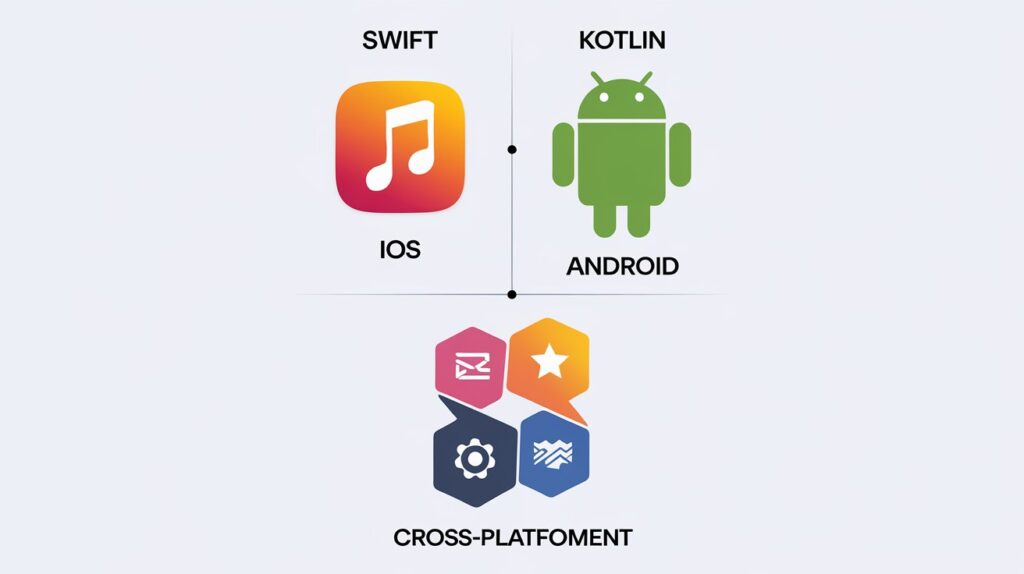
Are you building an iOS, Android, or cross-platform app? Native languages like Swift and Kotlin are ideal for platform-specific apps, while JavaScript and Dart are better suited for cross-platform development.
2. Project Requirements:
Consider the complexity and specific requirements of your app. For example, if your app requires high performance and low latency, languages like Swift, Kotlin, or Rust may be the best choice.
3. Developer Expertise:
Choose a language that aligns with your team’s skills and experience. If your team is proficient in JavaScript, frameworks like React Native or NativeScript may be the best option.
4. Development Time and Cost:
Cross-platform development can save time and resources compared to building separate native apps. However, native development may be necessary for apps that require platform-specific features.
5. Community and Support:
A strong developer community and extensive documentation can make it easier to find solutions to common problems and stay updated on the latest trends.
Conclusion: Choosing the Right Language for Your Mobile App
Selecting the best programming language for mobile app development depends on various factors, including the target platform, project requirements, and developer expertise. Here’s a quick summary to help you decide:
- Swift: Best for native iOS apps.
- Kotlin: Ideal for modern Android development.
- JavaScript: Perfect for cross-platform apps using React Native.
- Dart: Excellent for building visually rich apps with Flutter.
- Java: Reliable for native Android development.
- C#: Great for cross-platform apps with Xamarin.
- Python: Suitable for lightweight and experimental apps.
Ultimately, the best programming language for your mobile app will depend on your specific needs and goals. By understanding the strengths and weaknesses of each language, you can make an informed decision and set your mobile app project up for success. Happy coding!